When the Water Pulls Back: Walking the Ocklawaha Drawdown
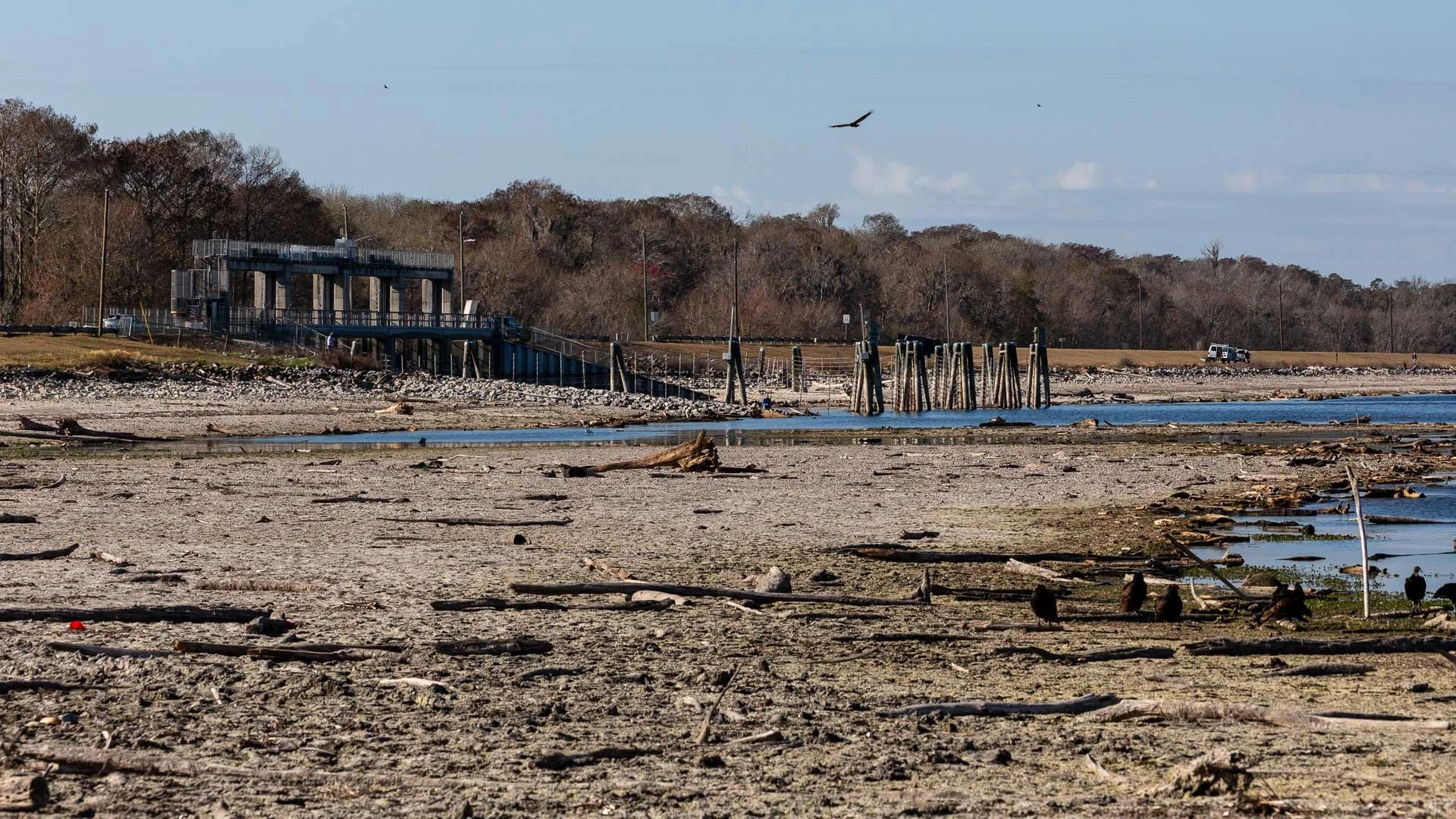
A four-gate spillway (Rodman/Kirkpatrick Dam) controls the water levels of the reservoir. The dam lingers as a remnant of an idea that never fully belonged here. As of March 2026, it is classified as a "High Hazard Potential" structure. Uncontrolled failure of the dam is now expected to result in loss of human life and significant economic damage to the over 500 properties downstream.
The idea was ambitious: Florida’s own version of the Panama Canal, a shortcut across the state from the Atlantic to the Gulf. It wasn’t new as such vision dates back to 1565, when Florida was under Spanish rule. Construction began in 1935, but by 1971, growing environmental concerns (but more likely decades of political maneuvering and stalled funding) stopped the project. The dam, however, persisted, becoming a symbol of one of Florida’s longest environmental conflicts.
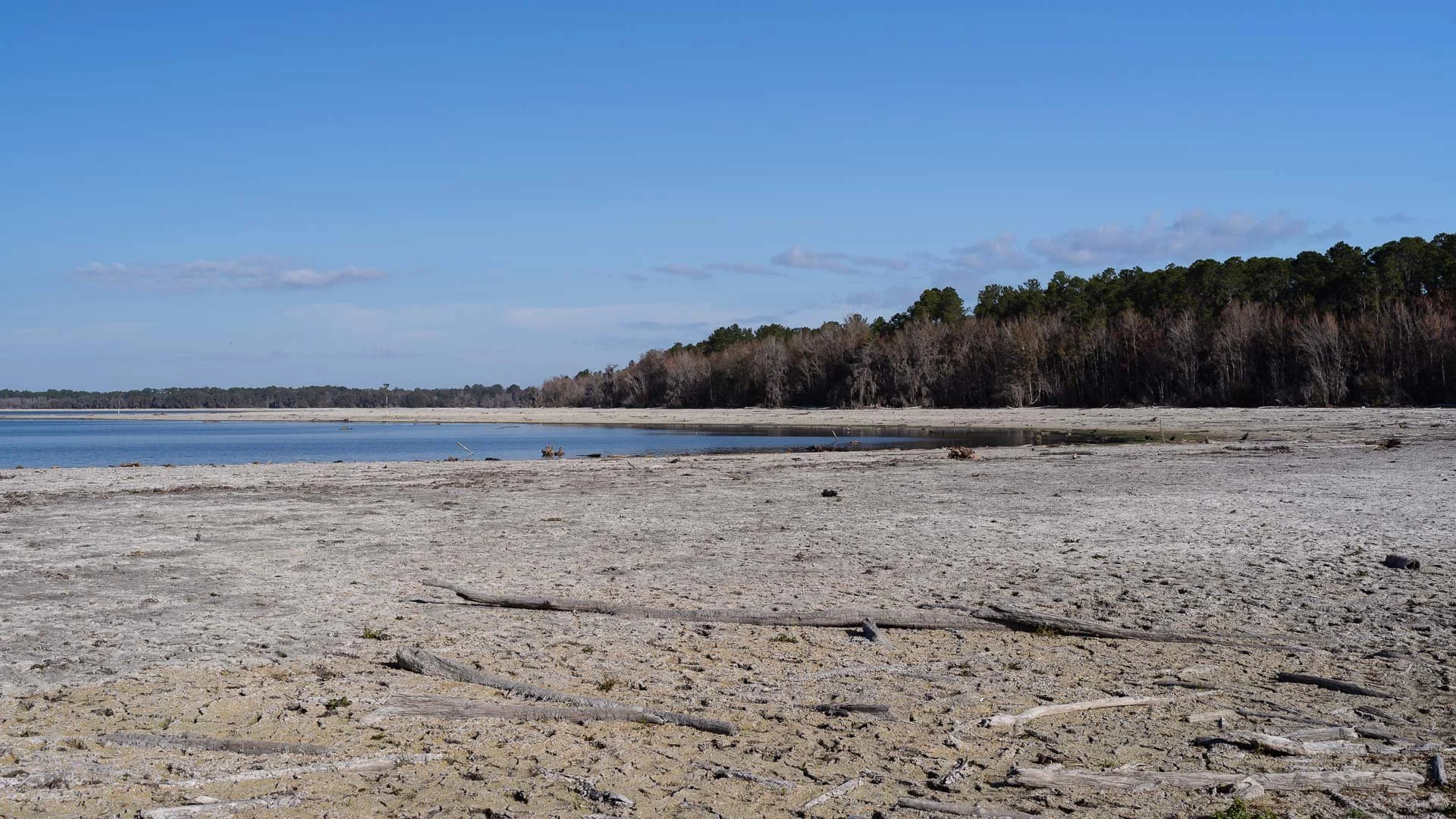
And here I was, February 14, 2026, standing on the drawdowned soil of the Ocklawaha River.
Sandy, squishy and in places unsteady underfoot, at one point, I found myself sinking in, nearly losing a shoe. It felt fitting somehow. On a day centered around love, I was standing in a place of a cautionary tale.
What is usually hidden beneath the water was exposed. The sun was bright, and I stood there squinting to scan the horizon and shoreline. Islands had reemerged. Mile markers towered high above me, no longer marking anything close to the current waterline. And in the distance, a ghost forest of cypress stumps stood where water once covered everything.
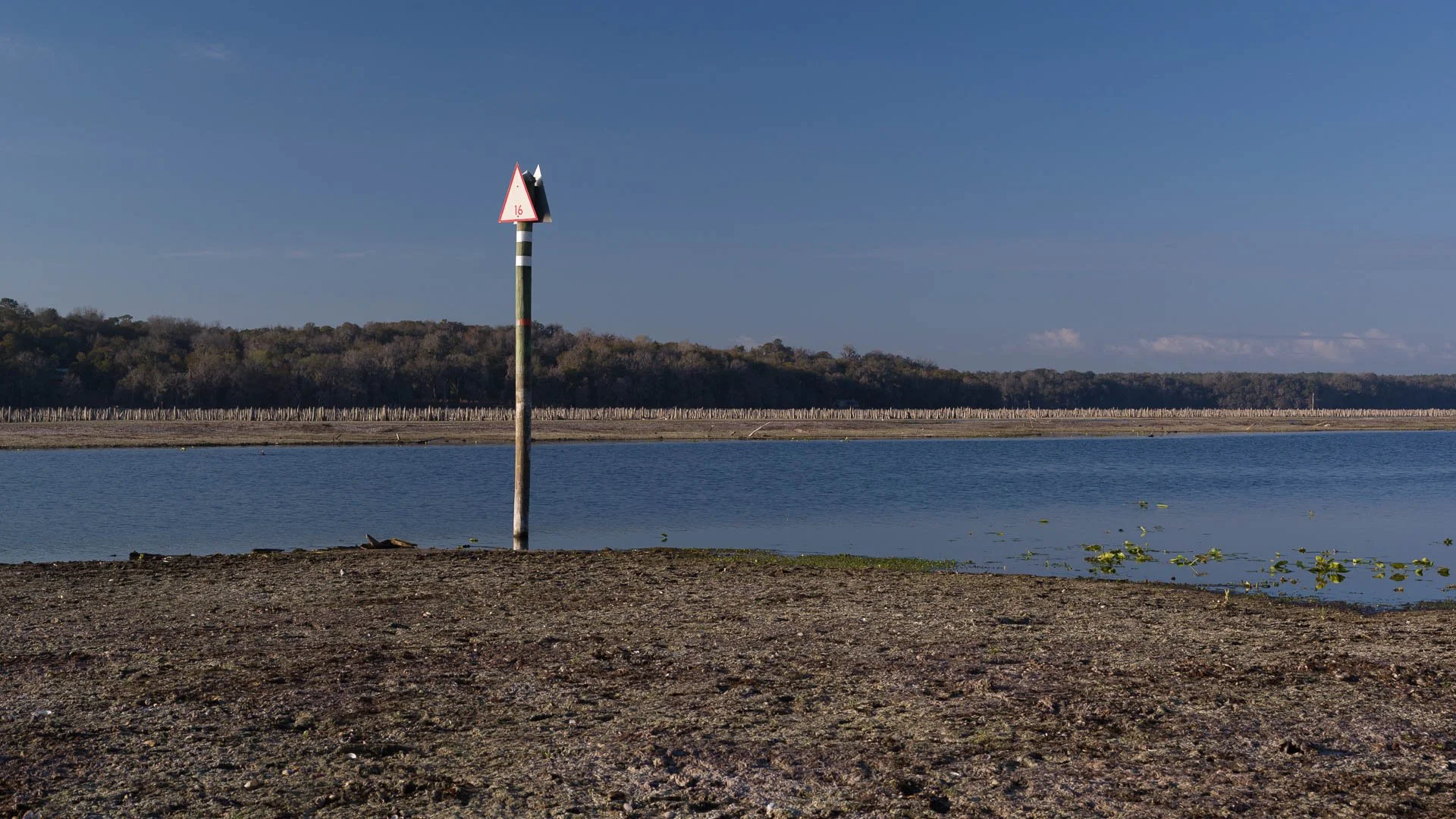
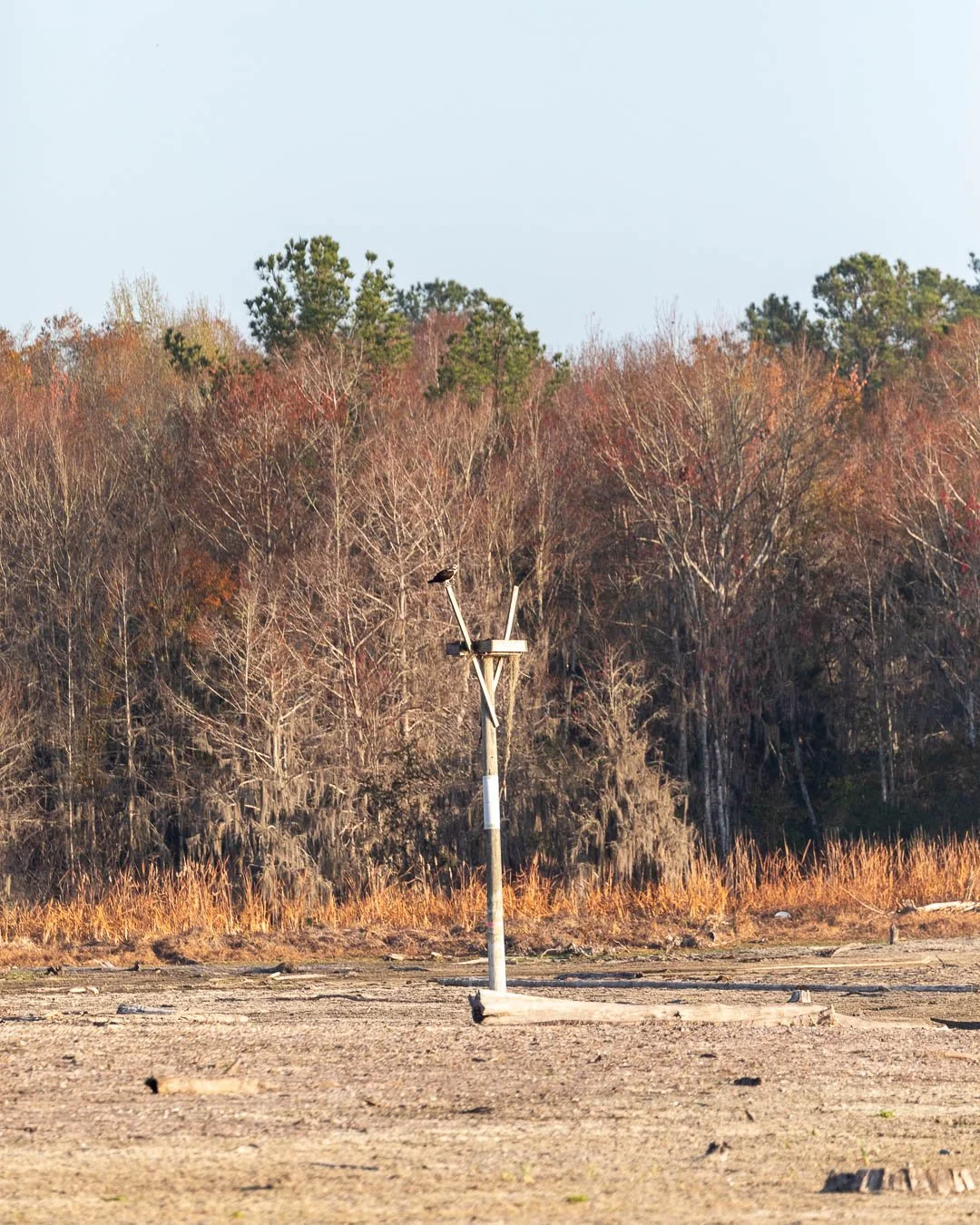
A lone channel marker stands in place, now disconnected from the water it once guided.
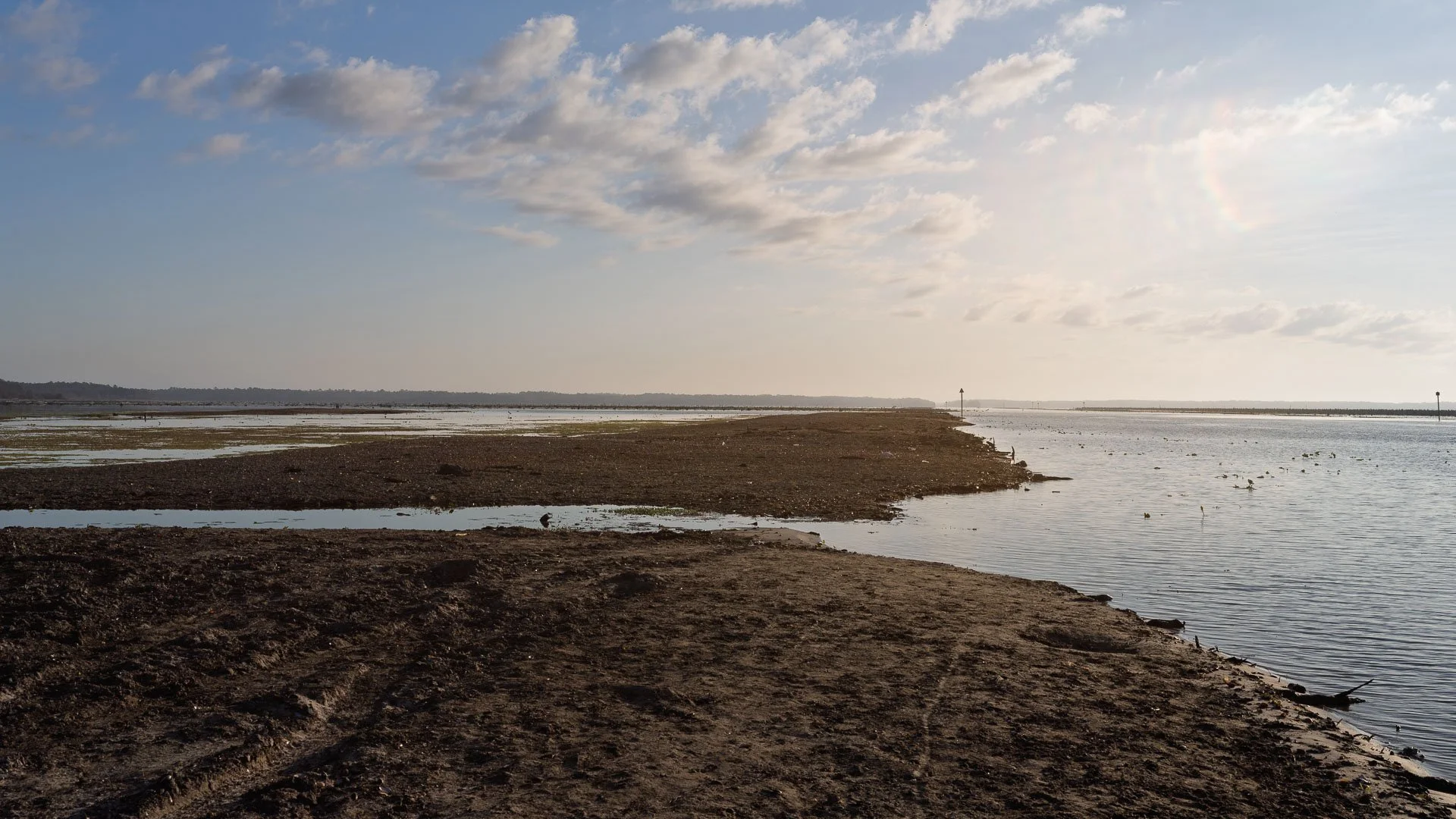
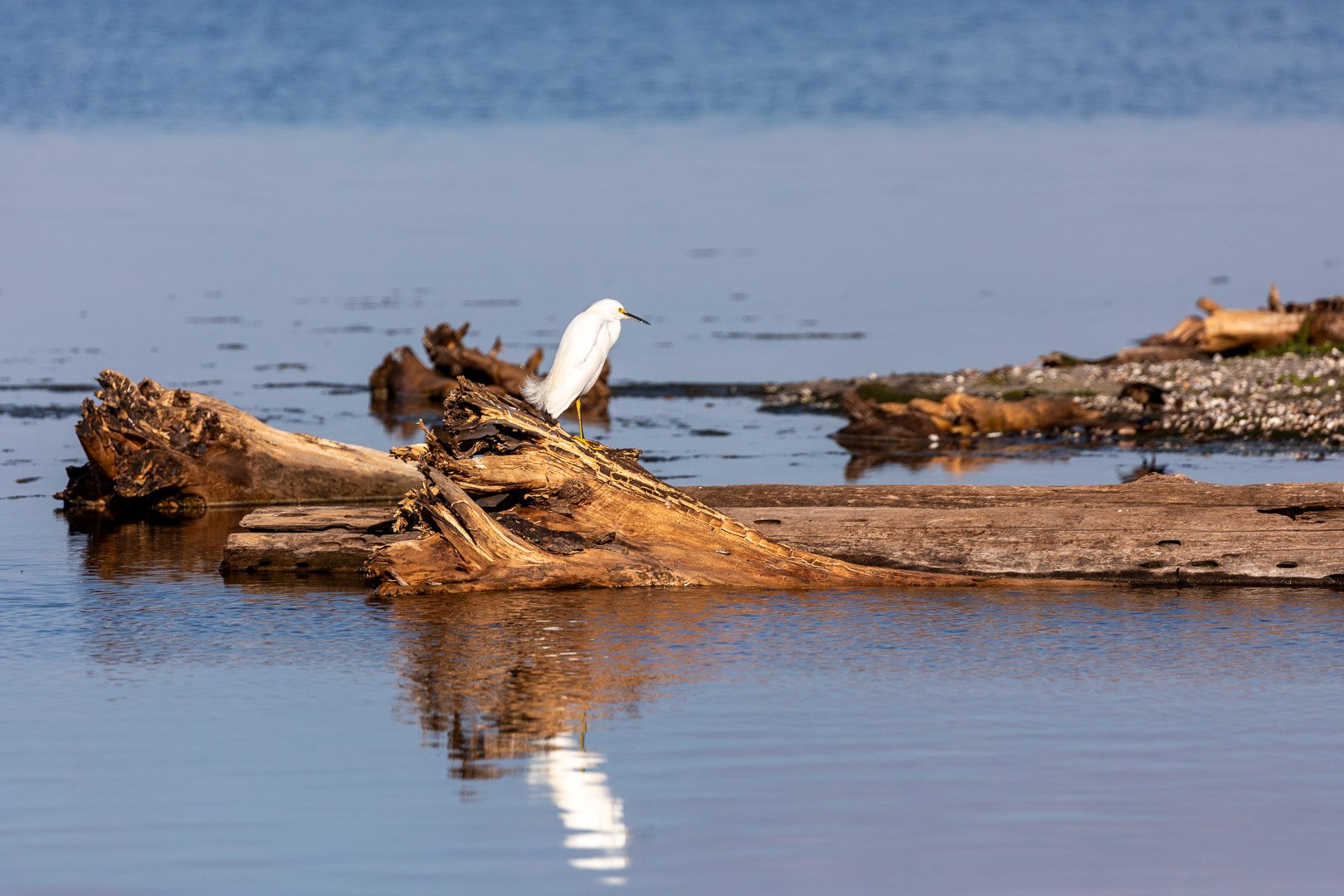
Ibis moved through the shallows, ospreys circled above, a White and Snowy egrets stood still in the distance. Lesser yellowlegs, Killdeer picked through the mud, taking advantage of a landscape that only appears every three to four years. Textured mudflats stretching out in the foreground were broken by scattered patches of vegetation. This place surely can recover if allowed.
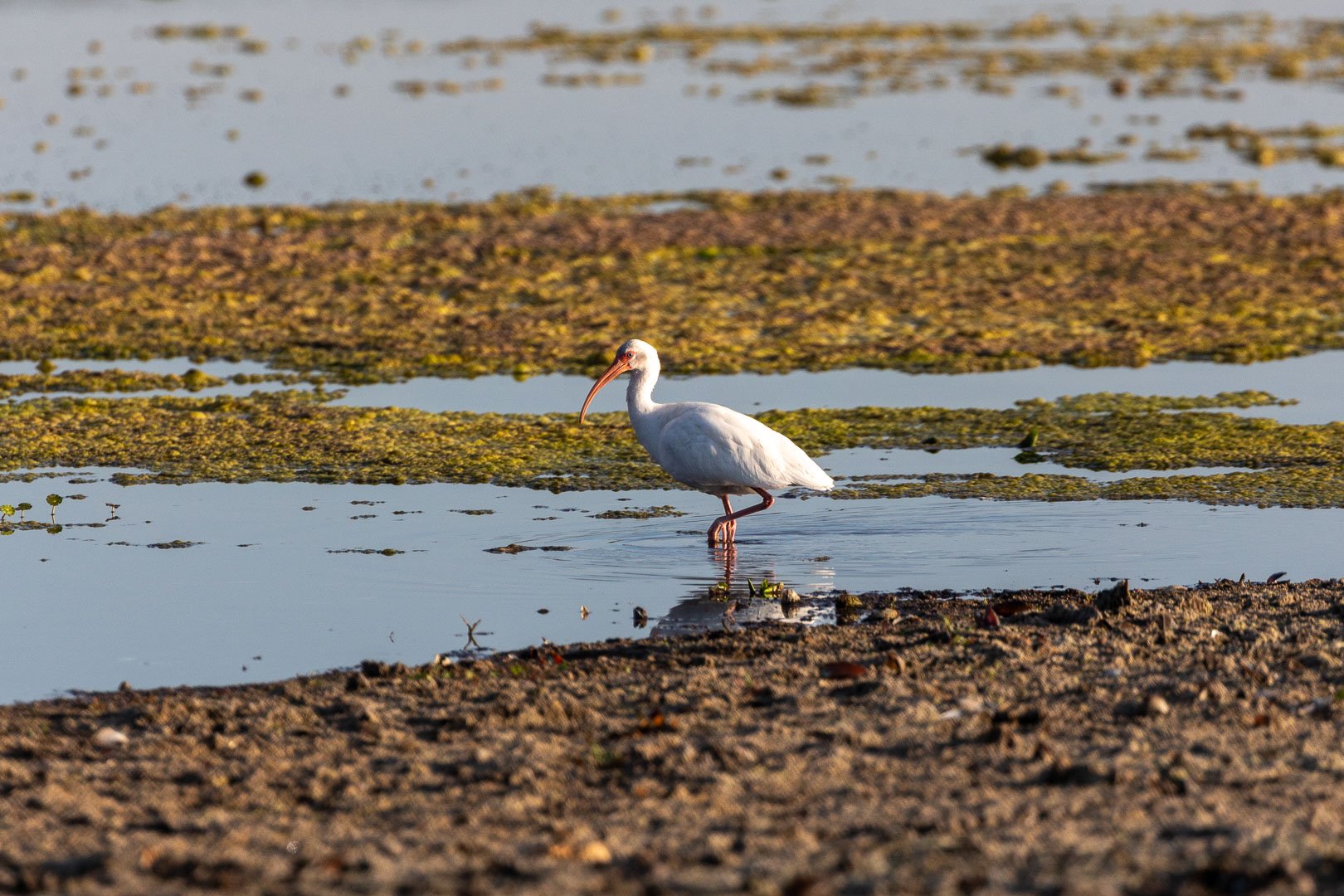
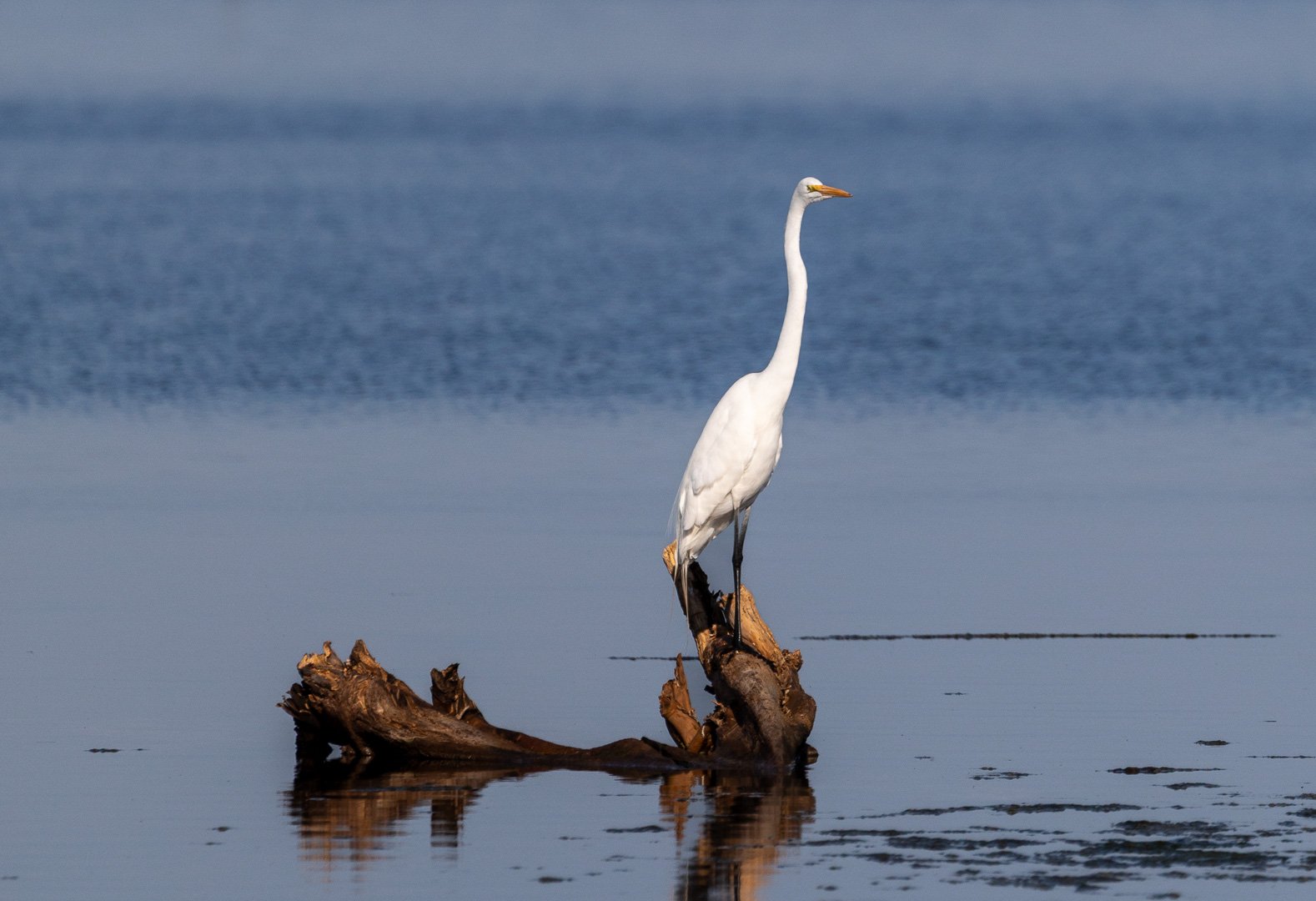
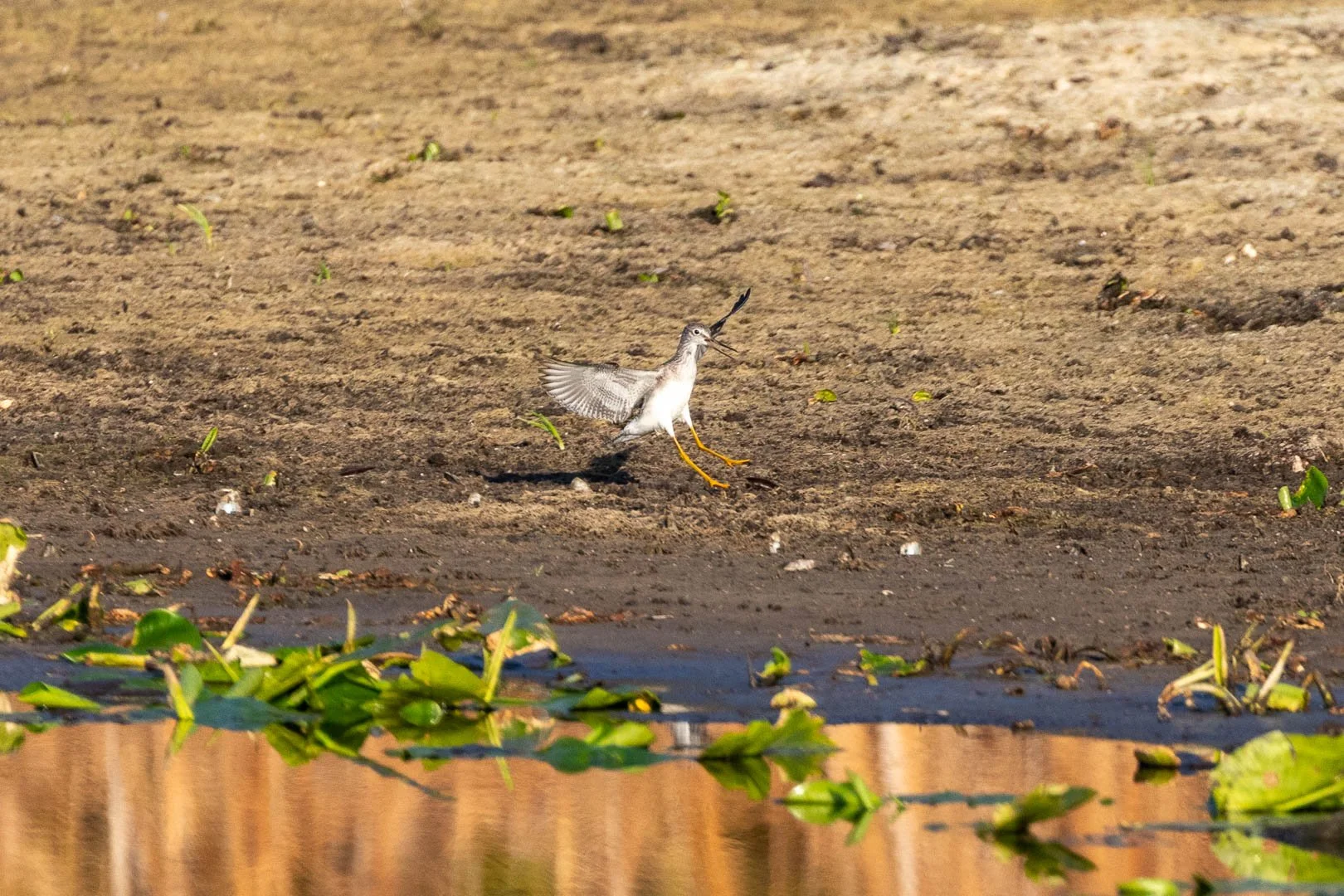
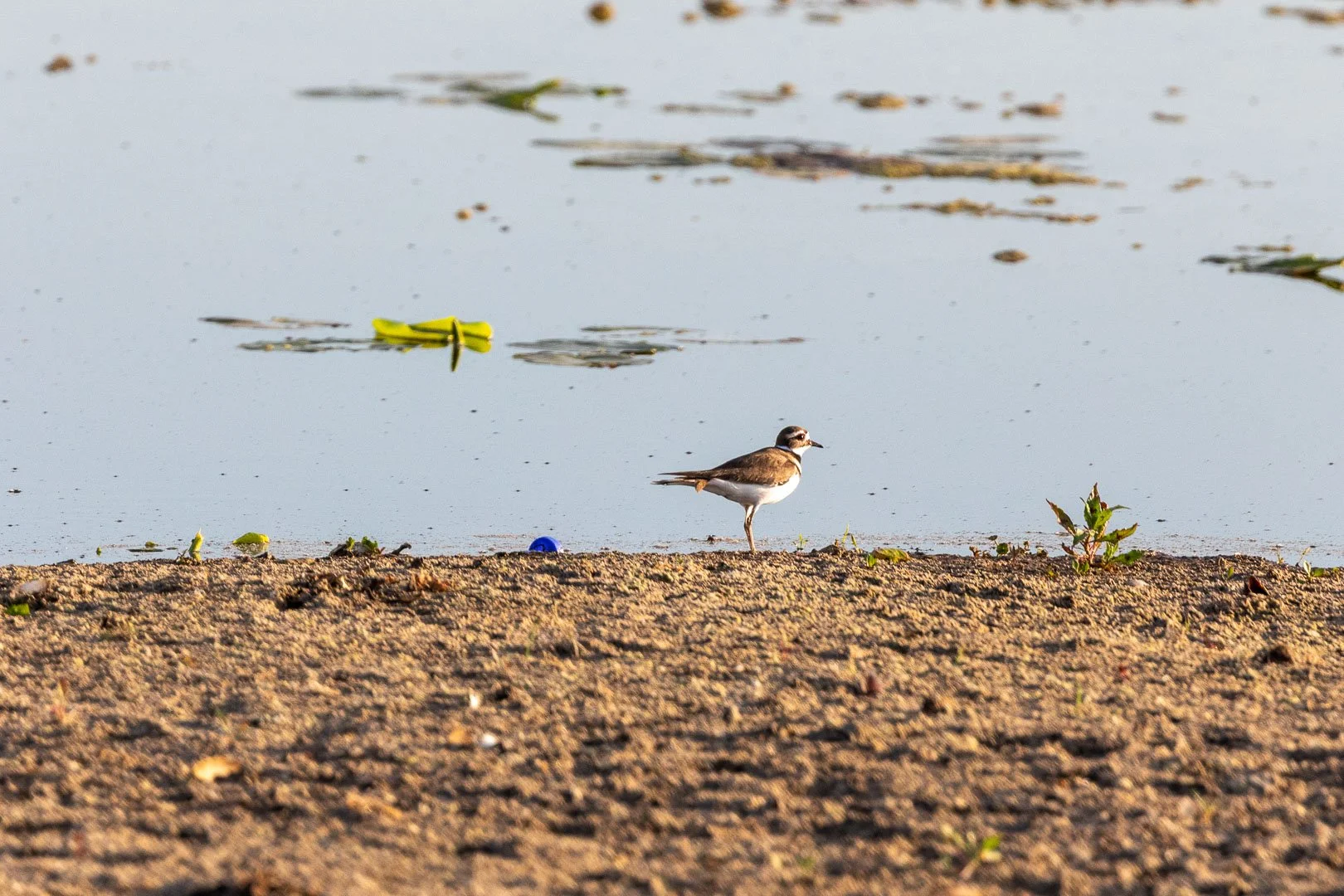
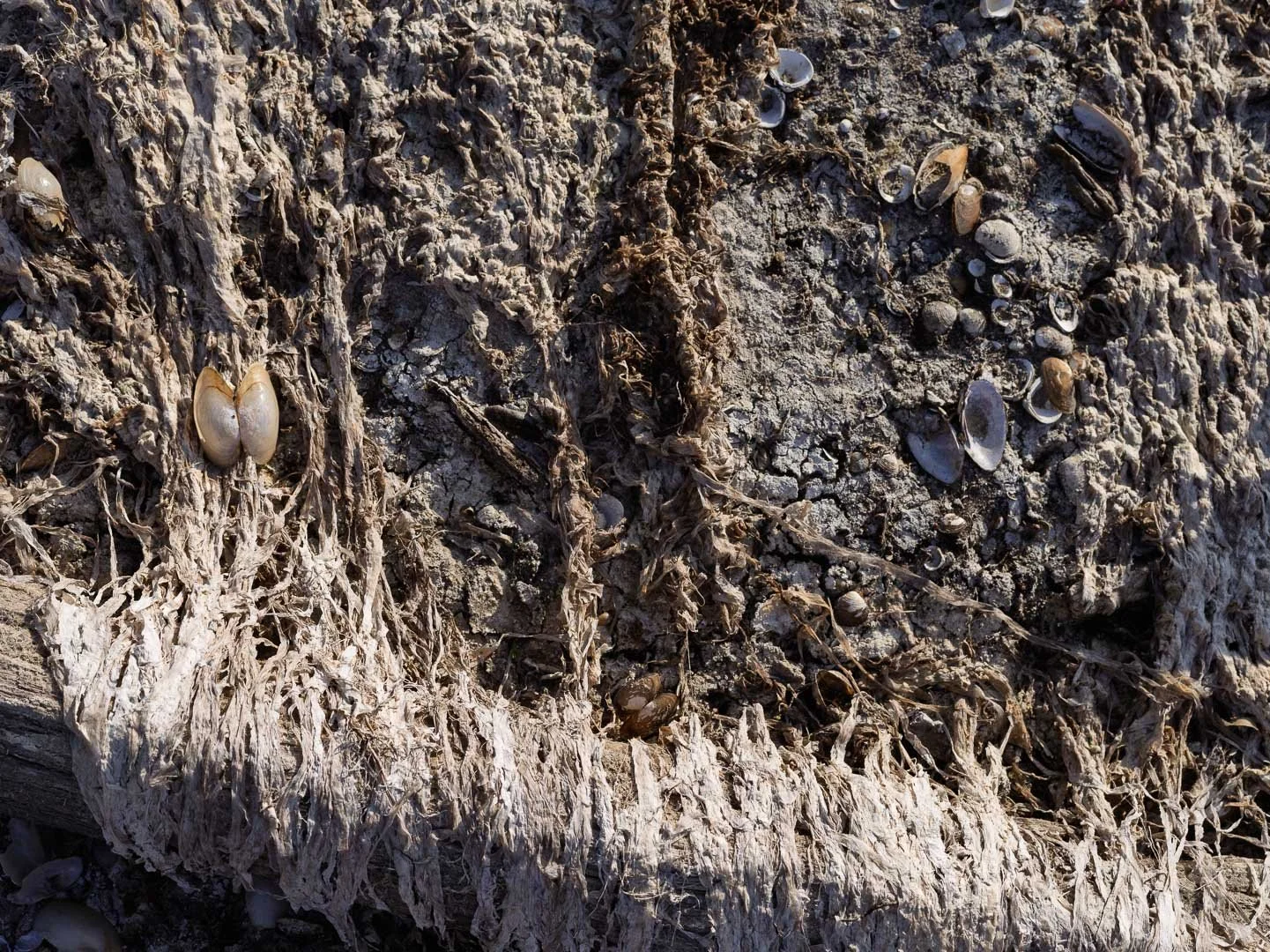
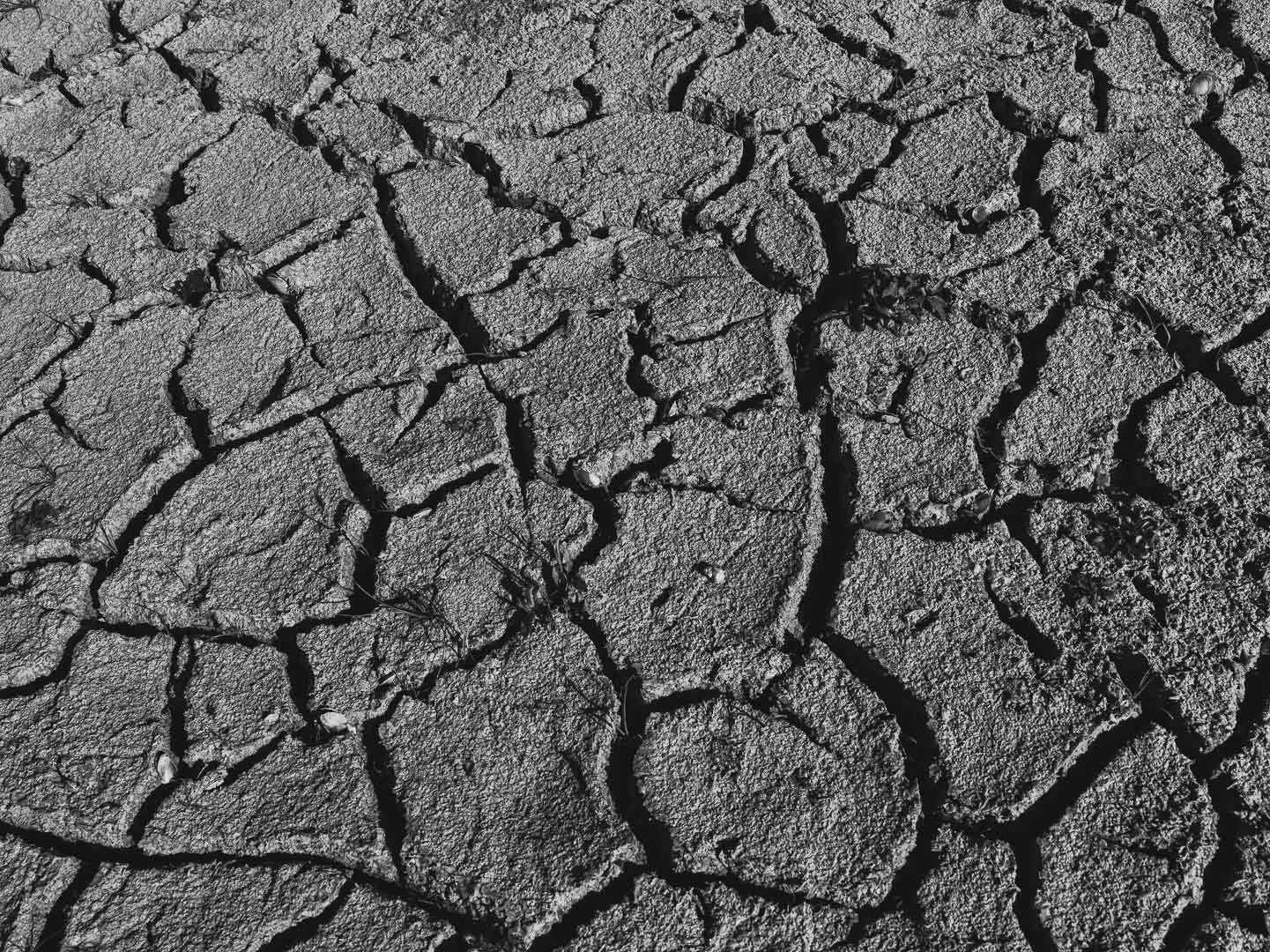
Textures of a drawdown. Sediment layered, cracked earth and clusters of shells embedded in the shoreline.
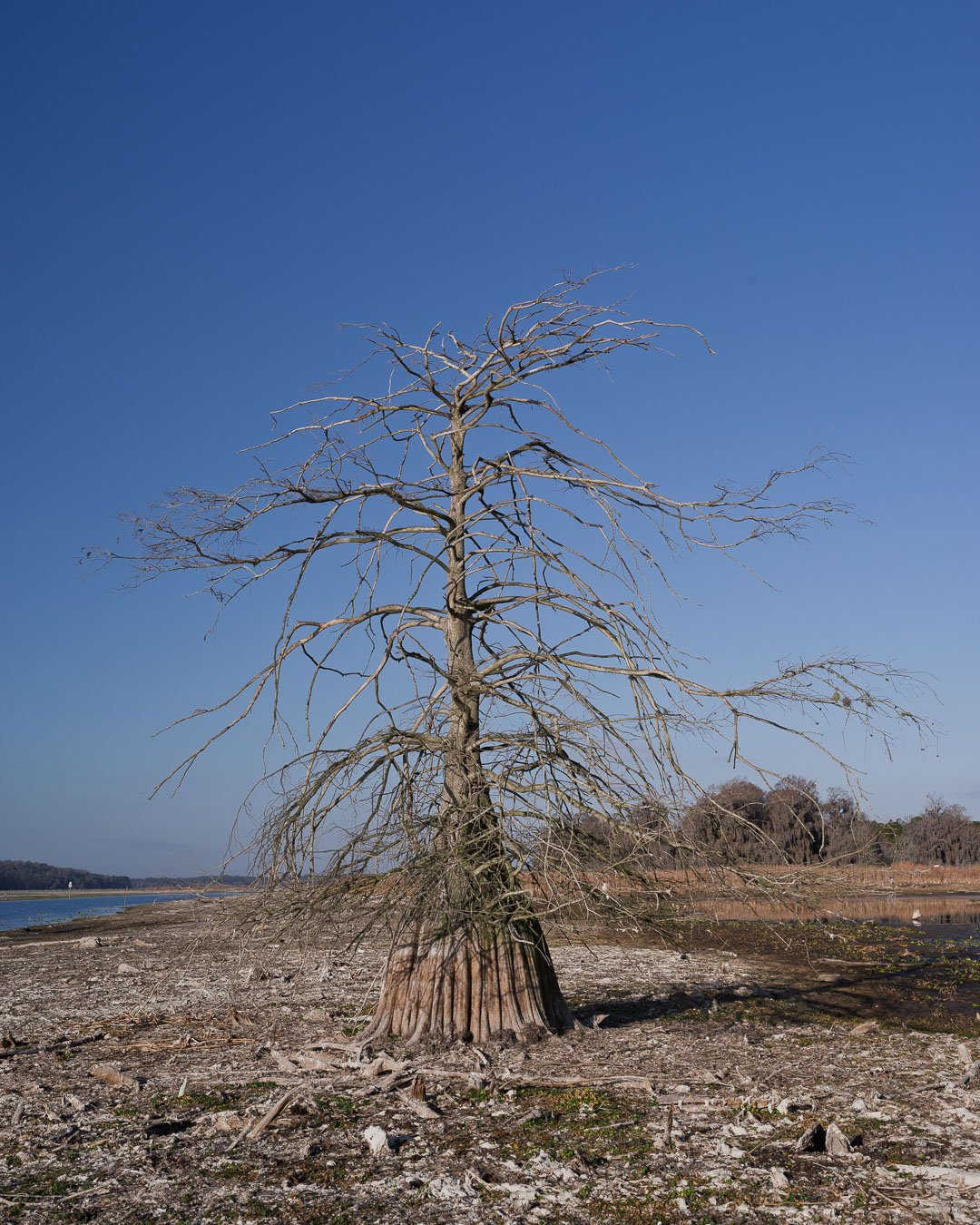
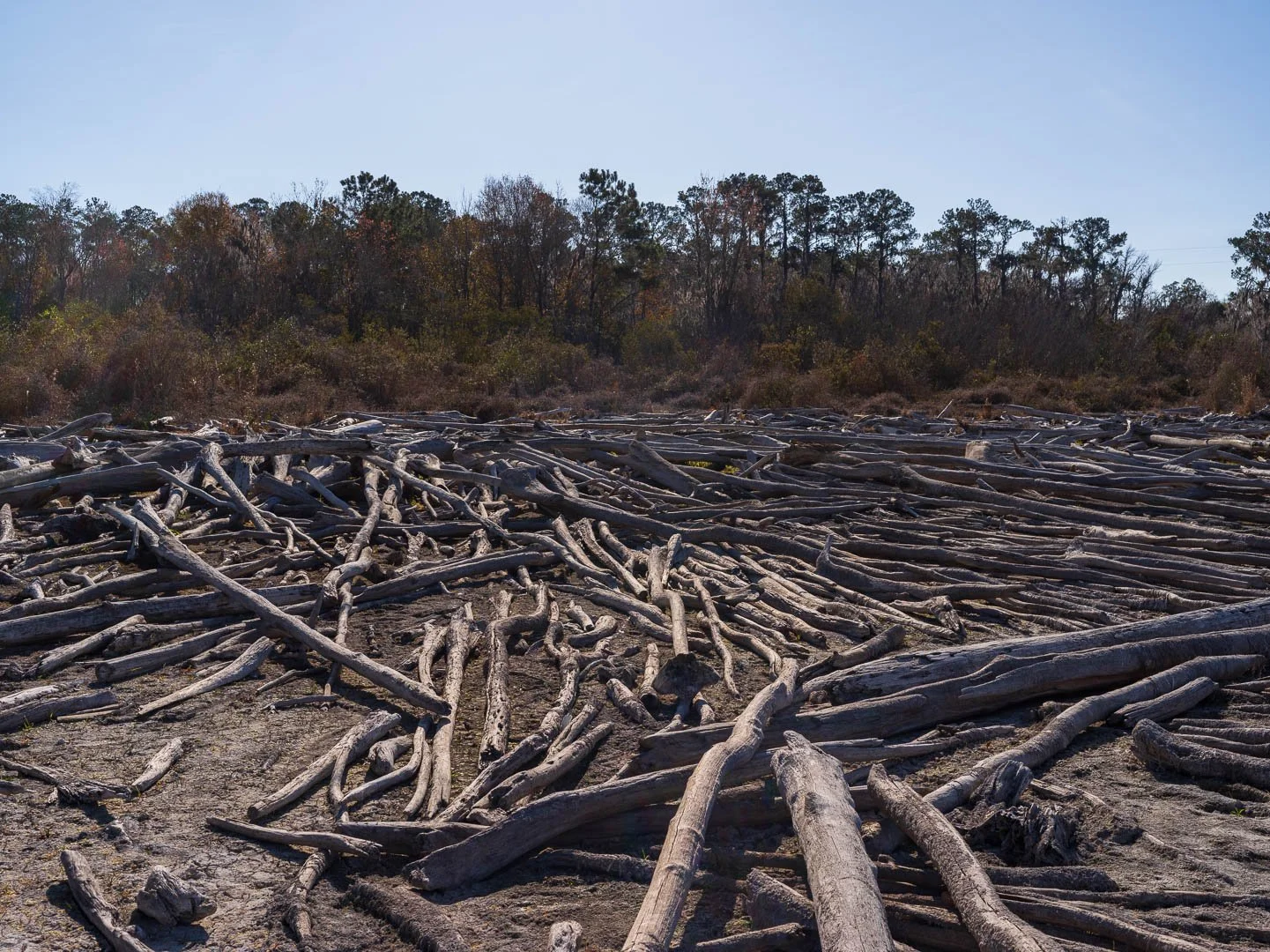
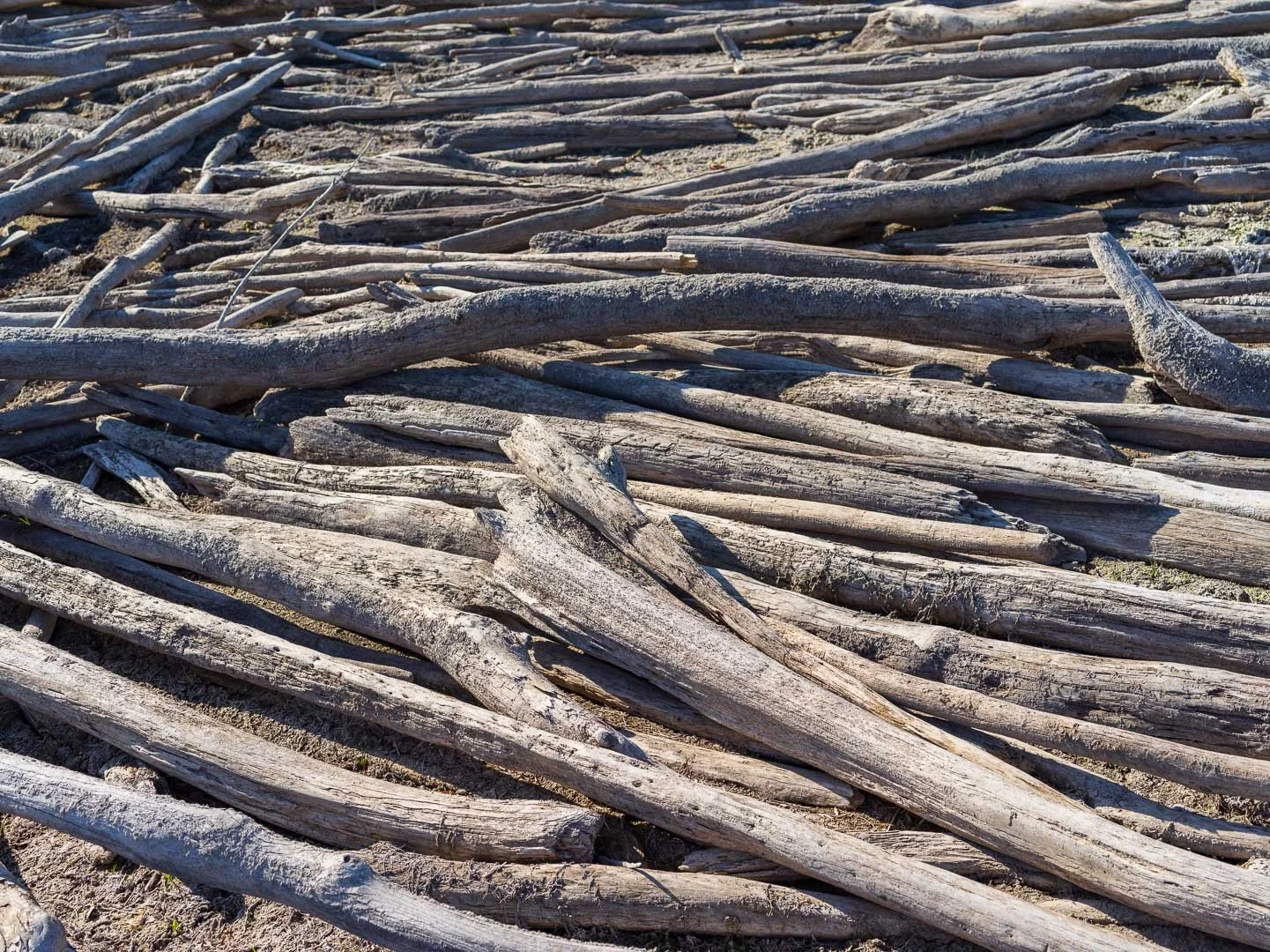
The landscape is somewhat of a haunting patchwork featuring thousands of drowned cypress trunks, massive concrete bridges over dry land, and "artificial mountains" of excavation that mark exactly where the dream of a cross-state canal died. As I made way to the other side of the reserve, I came across an endless maze of splintered trees. The remains of a drowned cypress forest. Before the area was submerged, the U.S. Army Corps of Engineers used a massive, 300-ton amphibious machine nicknamed “The Monster” or the Crawler-Crusher to clear the land. It didn't just cut trees, it flattened them into the mud to prepare the way for the canal.
There is an ongoing effort to make that restoration permanent. Environmental advocates have long pushed to open the Kirkpatrick Dam, reconnecting the St. Johns River and the Ocklawaha River with Silver Springs (one of the largest spring systems in the United States).
The latest attempt to move that forward, after decades of debate, failed this year, when lawmakers did not pass a bill before the legislative session ended. The proposal would have supported a $70 million project to restore the river by opening the dam over four years.
For now, the system remains in this in-between state.
Standing there, surrounded by mud, birds, and the remnants of a drowned forest, it’s hard not to see this as part of a much larger story that reflects a long history in Florida of reshaping the landscape and failing to put it back together.
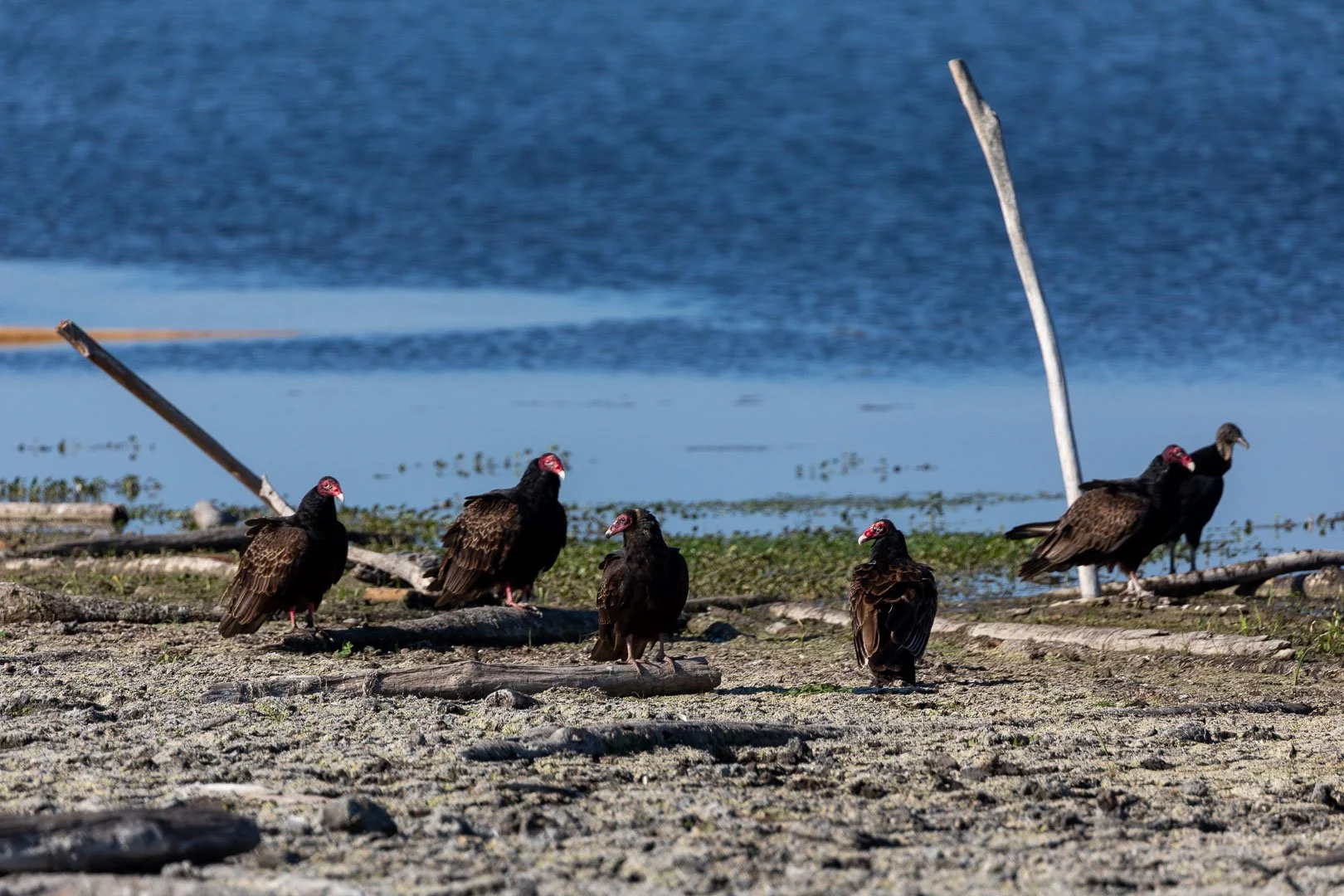
On newly exposed ground, the scavengers gather, reclaiming a place that hasn’t seen daylight in years.